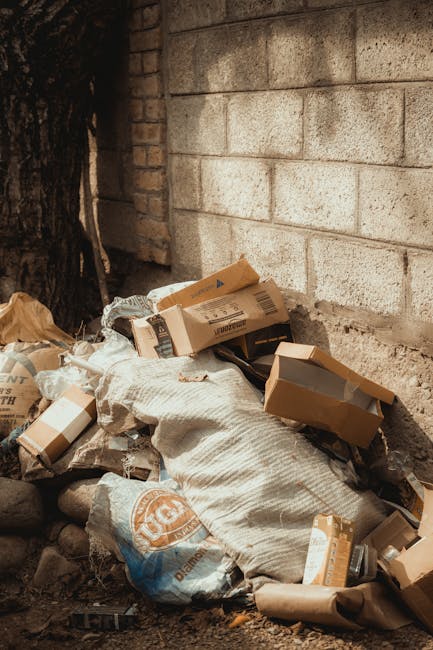
Chestnut Grove Balham guide to bulky rubbish removal and recycling
If you live or work near Chestnut Grove in Balham, bulky rubbish can go from mildly annoying to full-on inconvenient very quickly. A broken wardrobe in the hallway, an old sofa in the front room, a stack of flat-pack boxes, a mattress that has been "temporarily" parked in the spare room for six weeks... it all starts to crowd your space. This Chestnut Grove Balham guide to bulky rubbish removal and recycling is here to make the process feel straightforward, practical, and a bit less stressful.
The aim is simple: help you understand what counts as bulky waste, how collection and recycling usually work in London, what to avoid, and how to make sensible choices if you want things cleared quickly without cutting corners. You do not need to become a waste expert. You just need a clear plan, a decent idea of what can be recycled, and a realistic sense of what fits your situation. Easy enough, really.
For readers who want a broader look at clearance options across the area, it can also help to understand related services such as general waste removal, furniture disposal, and recycling and sustainability practices. Those pages sit naturally alongside this guide because bulky rubbish is often part of a bigger household, flat, garage, or office clear-out.
Quick takeaway: the best bulky rubbish removal is usually the one that separates reusable, recyclable, and landfill-bound items before anything is loaded. That small bit of sorting can save time, reduce waste, and make the whole job feel much more controlled.
Table of Contents
- Why Chestnut Grove Balham guide to bulky rubbish removal and recycling Matters
- How Chestnut Grove Balham guide to bulky rubbish removal and recycling Works
- Key Benefits and Practical Advantages
- Who This Is For and When It Makes Sense
- Step-by-Step Guidance
- Expert Tips for Better Results
- Common Mistakes to Avoid
- Tools, Resources and Recommendations
- Law, Compliance, Standards, or Best Practice
- Options, Methods, or Comparison Table
- Case Study or Real-World Example
- Practical Checklist
- Conclusion
- Frequently Asked Questions
Why Chestnut Grove Balham guide to bulky rubbish removal and recycling Matters
Bulky waste is not just "more stuff". It is usually awkward stuff. Large furniture, old appliances, broken shelving, garden waste bundles, renovation leftovers, and those odd items that never quite fit into a normal bin collection. In a busy Balham street, that becomes a practical problem fast: it blocks rooms, creates trip hazards, attracts dust, and makes it harder to use your home properly.
For Chestnut Grove residents in particular, the challenge is often space and timing. Flats, terraced homes, shared entrances, narrow stairways, and limited parking can make bulky rubbish removal feel harder than it should. Add in recycling questions - what can be reused, what must be treated as waste, and what needs special handling - and it is easy to put the job off. Truth be told, most people do, at least once.
This guide matters because bulky rubbish is one of those tasks where a little preparation saves a lot of headache. If you sort items carefully, choose the right removal method, and understand what should be recycled, you get a faster clearance and a cleaner result. You also avoid the common mistake of treating everything as one pile, which is usually where delays, extra costs, and avoidable waste creep in.
There is also a sustainability angle. Not everything bulky needs to be thrown away. A surprising amount can be reused, repaired, donated, or broken down for recycling. That matters in a London borough where waste space is valuable and residents are increasingly trying to clear responsibly rather than simply quickly. If you want to read more about how responsible disposal fits into broader service choices, the page on recycling-led clearance is a helpful companion piece.
How Chestnut Grove Balham guide to bulky rubbish removal and recycling Works
At its core, bulky rubbish removal follows a simple sequence: identify the items, decide what can stay out of the waste stream, arrange the collection, and make sure everything goes to the right destination. The details matter, though. That is where a lot of people stumble.
In a typical domestic scenario, the process starts with a quick walk-through of the property. You look at each item and ask a few straightforward questions: Is it reusable? Is it recyclable? Is it waste? Does it need disassembly? Does it contain anything hazardous or electrical? A wardrobe, for example, may be part wood, part metal, part fixings. A sofa may have materials that need separating from the frame. Small decisions like that can make recycling much more effective.
Then comes access. This is especially important near Chestnut Grove where hallways, stairwells, basement steps, and parking restrictions can affect how smoothly a removal can happen. If items are bulky but manageable, they may be carried out safely. If they need to be dismantled first, that should be planned in advance. One slightly bent shelving unit can turn into an unexpectedly stubborn problem. It happens.
Finally, the collection itself should not just be about loading a van and leaving. A good clearance process sorts items so recyclable materials, reusable furniture, and residual waste are handled separately where possible. That may include wood, metal, textiles, cardboard, green waste, and electrical items. Some materials are easier to recycle than others, but it is almost always worth asking the question rather than assuming everything is destined for disposal.
If your clearance also includes mixed domestic items rather than just one or two pieces, a broader service such as home clearance or house clearance can sometimes be the more sensible route. It often works better than trying to tackle each bulky item piecemeal.
Key Benefits and Practical Advantages
There are a few reasons people choose a more structured bulky rubbish removal and recycling approach instead of simply trying to shift items by themselves. Some are obvious, some less so.
- It clears space quickly. That sounds simple, but it changes how your home feels. A room with one old sofa in it suddenly becomes a usable room again.
- It reduces stress. Heavy lifting, sorting, carrying, and disposal planning all take time and energy. Getting support with the process makes the day much easier.
- It improves recycling rates. Sorting items before removal means more material can be reused or recycled instead of treated as mixed waste.
- It can be safer. Large furniture, sharp fixings, and awkward lifting all carry risk. Proper handling matters.
- It suits busy schedules. If you live or work around Balham station, you probably do not want a long, drawn-out disposal project taking over your week.
There is another advantage that gets overlooked: better decision-making. Once people see bulky items grouped clearly, they often realise some things can be kept, repaired, sold, donated, or passed on. It is not unusual for a "clear everything" job to turn into "clear most things, recycle some, keep a few". That is a good outcome, not a complication.
For larger furniture, it may help to look at furniture clearance services in parallel with bulky rubbish removal. Furniture tends to take up the most space and is often the main driver behind a clearance decision anyway.
Who This Is For and When It Makes Sense
This guide is useful if you are dealing with one awkward item or a whole-room clear-out. In practice, the people who benefit most tend to fall into a few groups.
- Homeowners getting rid of old furniture, broken appliances, or general clutter
- Tenants moving out of a flat and needing a quick, tidy turnaround
- Landlords preparing a property between lets
- Families clearing lofts, garages, or spare rooms
- People renovating and left with packaging, broken fixtures, or leftover materials
- Small businesses with unwanted office furniture or mixed waste
It also makes sense when time matters more than doing everything yourself. If you have a deadline - a move-out date, a handover, a sale completion, a new sofa being delivered, or builders due in on Monday morning - bulky waste becomes less of an "I'll do it later" task and more of a must-fix problem.
And let's be honest, there are moments when the DIY route is simply not worth it. If you need to carry a mattress down a narrow staircase with a twist in the middle, and then somehow fit it into a car that was never meant for mattresses, you may want to reconsider the plan. Sometimes the sensible answer is the easiest one.
Step-by-Step Guidance
If you want a smooth bulky rubbish removal process near Chestnut Grove, a methodical approach helps. Here is a practical way to handle it.
- List everything that needs to go. Walk through each room and write down the items. Include broken pieces, mixed-material items, and anything partly dismantled.
- Separate what can be reused. Good-condition furniture, unopened household items, and items with resale value should be kept apart from genuine waste.
- Identify recyclable materials. Cardboard, metal, some wood, and some electrical items may be recyclable depending on their condition and how they are processed.
- Check access. Measure doors, stair turns, lifts, and any narrow points. If you have a basement flat or top-floor property, this is especially important.
- Decide whether dismantling is needed. Removing table legs, bed frames, or shelving can make transport safer and quicker.
- Group items by type. Put furniture together, bag loose waste separately, and keep anything fragile or sharp clearly marked.
- Request a clear price and scope. Make sure you know what is included, what happens to recyclable material, and whether extra labour might be needed.
- Confirm collection day details. Access, parking, and timing all matter more than people think. A small delay at the front door can ripple through the entire job.
- Keep an eye on the final sweep. Once items are removed, check cupboards, corners, and under furniture for stray bits. You always find one random screw. Always.
If your job includes a mix of bulky and general waste, you may find it useful to compare the scope with waste removal support rather than treating every item as a separate mini-project.
Expert Tips for Better Results
Small choices make a big difference in bulky rubbish removal. After all, the aim is not just to get rid of things - it is to do it efficiently and responsibly.
Tip 1: Sort before collection day. If you wait until the van arrives, the pressure can lead to rushed decisions. A bit of prep the day before makes the job calmer.
Tip 2: Keep recyclables clean where practical. Clean cardboard, separated metal, and dry materials are usually easier to process than mixed, wet, or contaminated waste. No need to scrub everything obsessively, just don't mix food waste into a box of recyclable packaging.
Tip 3: Be honest about access. If there is no lift, a tight stairwell, or restricted parking, say so early. It helps avoid surprises and keeps the job moving safely.
Tip 4: Think in layers. Ask: can this be reused, then recycled, then disposed of? That order usually produces the best outcome.
Tip 5: Use the job as a reset. If one item is going, there are often two more hiding behind it. In our experience, that is how "just the wardrobe" becomes "the wardrobe, two chairs, an old lamp, and half a shelf". Happens every time.
If you are planning a more specific clearance - such as garage contents, loft clutter, or old outdoor items - matching the task to the right service can help. For example, a garage clearance is ideal for heavy, dusty, awkward storage items, while loft clearance suits boxed belongings, broken furniture, and long-stored household pieces.
Common Mistakes to Avoid
Most bulky waste problems are avoidable. The tricky part is that they often look small until they are not.
- Leaving sorting until the last minute. If everything is piled together, recycling becomes harder and the collection takes longer.
- Ignoring access issues. A sofa that fits in the room may still be a pain to move out safely.
- Assuming all bulky waste can be treated the same. Electrical items, green waste, and furniture often need different handling.
- Underestimating the volume. A few large items can fill a vehicle faster than expected.
- Forgetting hidden extras. Drawers, cushions, shelves, fittings, packaging, and offcuts all add up.
- Mixing reusable items with waste. Once items are muddled together, reuse opportunities are easy to lose.
- Choosing speed without checking the process. Fast is good. Responsible and fast is better.
Another common slip is not checking how a service handles different item types. If you have an office chair, an old filing cabinet, and broken screens, a business-related clearance route may be more suitable than a general domestic one. That is where office clearance or business waste removal can be the better fit.
Tools, Resources and Recommendations
You do not need a van-load of equipment to manage bulky rubbish well, but a few simple tools help enormously.
- Measuring tape: useful for checking doorways, stair turns, and item dimensions
- Marker labels or sticky notes: helpful for tagging items as keep, recycle, or remove
- Heavy-duty gloves: sensible for dusty, splintered, or sharp materials
- Basic screwdriver or Allen key set: useful for dismantling furniture safely
- Strong bags or boxes: good for loose fixings, cords, small offcuts, and related bits
- A clear floor area: gives you space to sort before collection
In terms of service choice, the right option depends on the type of material and the scale of the job. If the main issue is a sofa, dining table, or bedroom set, furniture-focused services may be enough. If the job includes mixed household items, a broader home clearance or house clearance approach can be more efficient.
If your priority is value and clarity, it is sensible to review pricing and quotes before booking. Clear scope, honest access details, and item descriptions tend to make the whole process smoother for everyone.
Law, Compliance, Standards, or Best Practice
Bulky rubbish removal in the UK is not something to handle casually. You do not need to memorise legislation, but you should understand the basic principles that responsible clearance work follows.
First, waste should be handled by a legitimate, accountable operator. That means clear paperwork, sensible processes, and proper care for item handling and disposal. If you are arranging a clearance for a property you manage or occupy, it is worth knowing where the waste is going in broad terms, especially if the items include electrical equipment, broken appliances, or potentially reusable goods.
Second, recycling and reuse should be considered before disposal where practical. That does not mean every item can be saved, and it certainly does not mean every item will be recycled. It does mean the process should make a real effort to separate materials and reduce unnecessary landfill use.
Third, safety matters. Heavy lifting, sharp edges, damaged glass, and unstable stacks are all ordinary hazards in bulky rubbish jobs. Good practice is about reducing those risks with planning, the right people, and sensible handling. If you want to understand a provider's approach more fully, pages such as health and safety policy and insurance and safety can give useful reassurance about the standards behind the service.
For customers who like to know how their data and payments are handled when making an enquiry or booking, it can also be worth reviewing payment and security, plus the site's privacy policy. Not exciting reading, admittedly. But reassuring, and that matters.
Options, Methods, or Comparison Table
There is no single "best" way to remove bulky rubbish. The right method depends on volume, access, item type, and how much sorting you want to do yourself. Here is a simple comparison.
| Method | Best for | Strengths | Limitations |
|---|---|---|---|
| DIY disposal | One or two small bulky items | Can be low-cost if you already have transport | Heavy lifting, time-consuming, recycling can be harder |
| Mixed bulky waste clearance | Several large items or a whole-room clear-out | More efficient, less strain, better for awkward access | Needs good item description and access details |
| Furniture-focused removal | Sofas, beds, wardrobes, tables | Good for large household items, often easier to plan | Less suitable if the job includes mixed waste too |
| Garage or loft-specific clearance | Stored clutter and long-untouched belongings | Good for mixed, dusty, and awkwardly stacked items | May need more sorting and time on site |
If your clearance is tightly focused on one space, the relevant specialist page can help you match the job to the right service. A room full of attic boxes is a different beast from a pile of old garden pots and timber offcuts, after all.
Case Study or Real-World Example
Imagine a typical Chestnut Grove flat where a tenant is moving out and needs to clear a worn-out bed frame, a chest of drawers, two broken chairs, several boxes of mixed household bits, and a sagging armchair that has somehow become the unofficial storage shelf for spare blankets.
The first instinct might be to leave it all in one pile and hope for the best. That usually creates more work. The better approach is to separate the bed frame from loose waste, remove any reusable bedding or household items, and check whether the drawers or frame can be dismantled safely. Once the items are grouped, the clearance becomes much easier to handle, and recyclable material is less likely to be lost in the mix.
In a case like this, the key win is not just speed. It is control. The tenant gets the property back in good shape, the bulky items are handled in a tidy sequence, and reusable or recyclable materials are more likely to be diverted properly. The whole thing feels less chaotic. A bit boring, perhaps, but in the best way.
We have found that jobs like this often go smoothly when people are upfront about access and item types at the start. If there is a narrow stairwell, a shared entrance, or a need to work around a neighbour's parking space, saying so early avoids awkward delays on the day.
Practical Checklist
Use this checklist before you arrange bulky rubbish removal:
- List every bulky item clearly
- Separate reusable items from waste
- Identify anything recyclable
- Check for electrical or special items
- Measure awkward furniture or access points
- Decide whether dismantling is needed
- Clear a path to the exit
- Confirm parking or loading access
- Ask what happens to recyclable materials
- Review price, scope, and timing before booking
- Keep valuables and personal papers away from the clearance area
- Do a final sweep after removal
A small tip that saves hassle: take a quick phone photo of the items before collection. It helps you remember what was agreed, and it is oddly useful if the room changes afterwards.
If you are looking at a bigger declutter and want to understand the wider picture, the service pages for flat clearance, furniture clearance, and builders waste clearance can help you see how bulky rubbish removal fits into different real-world jobs.
Conclusion
Chestnut Grove Balham guide to bulky rubbish removal and recycling is really about making a messy task feel manageable. Once you know what you have, what can be reused, what can be recycled, and what genuinely needs disposal, the whole process becomes much less daunting. That is the difference between endless clutter and a clear, usable space.
The best results usually come from simple habits: sort early, be honest about access, avoid mixing everything together, and choose a service that treats recycling as part of the job rather than an afterthought. Whether you are clearing one awkward item or an entire room, a calm and practical approach will nearly always save time and stress.
If you are ready to compare options, get organised, and move things forward, start with a clear plan and a trusted service overview. You will feel better once the first bulky item is gone. Honest. Space has a way of changing the mood of a home.
Get a free quote today and see how much you can save.
Frequently Asked Questions
What counts as bulky rubbish in a Balham home?
Bulky rubbish usually means items too large for normal bin collection, such as sofas, wardrobes, beds, mattresses, tables, shelving, and large mixed household items.
Can bulky items be recycled?
Often, yes. Many bulky items contain recyclable materials such as metal, wood, cardboard, or textiles. The exact recycling route depends on the item's condition and composition.
Do I need to dismantle furniture before collection?
Not always, but dismantling can help when items are too wide for doorways, stairwells, or tight access points. It also makes lifting safer and quicker.
Is it better to use furniture disposal or general waste removal?
If the main items are sofas, beds, tables, or wardrobes, furniture disposal or furniture clearance is often the better fit. If the load is mixed, general waste removal may be more suitable.
How should I prepare for bulky rubbish removal near Chestnut Grove?
Group items by type, clear a path, check access, separate anything reusable, and make sure you know which items need special handling before collection day.
What happens to recyclable bulky waste?
Recyclable material is typically separated from residual waste where practical and sent into the appropriate recycling stream. Some items may also be suitable for reuse.
Can I include office furniture in a bulky waste collection?
Yes, in many cases office furniture can be included, especially if you are clearing desks, chairs, storage units, or mixed business items. Office-specific clearance may be more efficient for larger jobs.
What are the biggest mistakes people make with bulky waste?
The most common mistakes are leaving sorting too late, underestimating volume, forgetting access issues, and mixing reusable items with waste so recycling opportunities are lost.
How do I know if a clearance service is trustworthy?
Look for clear service information, sensible pricing explanations, published policies, and a straightforward process for handling safety, payments, and recycling. Transparency is usually a good sign.
What if I have bulky rubbish in a loft or garage?
Then it is often best to treat it as a space-specific clearance rather than a random pile of items. Loft and garage clearances are usually more efficient for stored, dusty, or awkwardly packed belongings.
Can bulky rubbish removal help with moving house?
Definitely. It can reduce what you take to the new property and make the move lighter, cleaner, and less stressful. A lot of people use clearance as a reset before moving day.
How can I make sure I recycle as much as possible?
Sort items before collection, separate reusable goods, keep materials clean and dry where practical, and choose a service that treats recycling as part of the process. Small effort, better outcome.
For more background on the company and its wider service approach, you may also want to review the about us page or use the contact us page if you are planning a clearance and want to discuss the details first. A quick conversation can save a lot of back-and-forth later.
And that really is the heart of it: bulky rubbish is rarely as complicated as it first looks, but it pays to handle it with care. Once the clutter is gone and the room opens up again, the relief is immediate.